

Bunk Bed Safety Tips For Small Single Sleepers
Bunk beds are a favorite choice for families with children. They also work well for large guest rooms as well as vacation homes.
The majority of bunk beds have straight ladders or an angle ladder. A straight ladder that is built into the frame can take up less space however it will be more difficult to climb.
Size
Bunk beds are typically associated with families with two or more children sharing the same room. However, they are also a great choice for sleepers who are single. They are a favorite among siblings who like to sleep apart however, they can also be used to accommodate relatives or friends for a stay-over.
A bunk bed will come with a headboard and a foot board, where children rest their head and feet respectively, along with side rails that attach the sides of the frame to each other. They are available in metal or wood and are available in various sizes and shapes.
The mattress is an essential element of any bunk bed and can have a significant impact on the comfort and quality. You can choose from a variety of bunk bed mattresses including traditional innersprings and memory foam mattresses, which are suitable for both the top and bottom bunks. Hybrid and latex mattresses are also options, since they offer better airflow and support for heavier sleepers.
Be aware that the mattress on the top bunk should not be greater than 6 inches in thickness to prevent the rails of the guard from being too close ceiling. A mattress that is more dense increases the risk that a sleeper may fall off the sleeping in the night. This could be dangerous. A thicker mattress is preferred for the bottom bunk as it provides more support to the sleeper.
It's an excellent idea, especially if you have children sleeping on the upper bunk, to ensure often to ensure that the slats that support the mattress are strong. It is also an excellent idea to air-dry your mattress for bunk beds or remove the bedding from the top bunk and let it breathe periodically to reduce moisture, which can cause mildew and mould. It is also important to follow the manufacturer's care instructions specific to the mattress you have chosen to ensure it's in good order and preserve its warranty.
Mattress
Bunk beds come in a variety of sizes. Some bunk beds are equipped with a standard single or double mattress as well as futons on the lower bunk. It is important to choose the correct mattress size depending on the number and age of people who are sleeping in the bed. The mattress should be constructed from substances that are hypoallergenic to help with allergies. Memory foam or gel mattresses are perfect for people who suffer from night sweats, joint and muscle pain or sleep with night sweats.
The twin size mattress measures 38 inches wide by 75 inches long. It is a great choice for younger children or adults who sleep alone. A twin XL mattress is a little bigger at 80 inches and is ideal for taller adults and teens. You should be sure to measure your bedroom before purchasing a bunk bed. A different mattress size will affect the style and feel of the room.
Full size bunk beds are 75 x 54 inches and are able to hold two small children or one adult. They work well on the bottom bunk and can be utilized in a full over full configuration. Some bunk beds also feature the trundle bed, which is a pull-out drawer that can be used to accommodate guests as well as storage.
Some bunk beds have an L-shaped frame. others are more square or straight. The latter type works best in rooms with limited floor space. The full-over-full configuration is most popular, since it can comfortably accommodate two adults or teens.
When buying bunk beds, make sure the slats are sturdy and can withstand the weight of the mattress. Check that they are properly placed and evenly spaced as this ensures proper mattress support and prolongs its life. single bed bunk is also a good idea to rotate the mattress frequently.
You can choose between hybrid, innerspring, memory foam, latex or other types of mattresses to create a bunk bed. Certain mattresses are more dense and can impact the way they fit into the guardrails of the top bunk. You should select one that is in line with the recommended thickness of your bunk bed and not over the weight limit.
Ladder
Bunk beds can be an ideal space-saving solution in children's bedrooms However, if they're not built or maintained properly they could pose a safety risk. Regular inspections and maintenance, along with the right safety precautions, can avoid accidents like falls and entrapment. This means that you must ensure that the bed is constructed from high-quality materials and is in line with the guidelines of the manufacturer for weight limits. It is also important to regularly inspect the ladder and guardrails to ensure that they're sturdy and free from loose connections.
Ladders should be securely attached to the frame and set at an appropriate angle for safe climbing. They should also be sturdy and constructed from solid wood or metal. They should be sanded and finished with several thin layers of polyurethane to protect against wear and tear. This will ensure that the ladder isn't slippery and reduces the risk of injury. Parents should teach their children how to safely climb and descend the ladder, and avoid excessive use and horseplay. It is also essential to protect the bunk bed from dangers like windows or heaters, as well as hanging lighting fixtures.
Another aspect of bunk bed safety is ensuring that the ladder's rungs are adequately spaced so that they do not cause entrapment dangers. They should not exceed 12 inches apart. Ideally they should be less than 10 inches. This is particularly important for older children who might be tempted by the railings to play or climb up on the bunk. The mattress should be able to fit into the frame and the gap between the mattress and guardrails shouldn't be more than 7.5cm.
The kind of ladder you pick will also impact your overall bunk bed size. Some models have a straight ladder that takes up less space and some models feature an angled staircase which offers more headroom. Some bunk beds can be divided into lofted beds that are suitable for older adults and children who require more space for sleeping.
If you are buying a bunk bed made of wood that is small single, it is important to make sure that the rungs are sanded and finished with several layers of polyurethane to avoid splinters. The ladder should also be angled to allow you to climb off and on the bed.
Safety
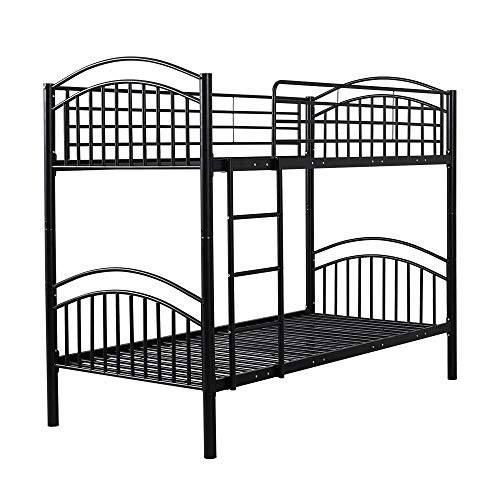
Before purchasing a bunk bed it is essential to take a number of safety measures into consideration. Be sure that the bed is built correctly. Look for wooden slats that are screwed or hammered into the side rails and that they are evenly spaced. These slats will support the mattress and keep it from sagging with time. The foundation of the bed should be sturdy. Examine it for broken or loose pieces that could lead to a fall. The ladder must be securely attached to the bed frame and at an angle that is safe. It is crucial to adhere to the manufacturer’s guidelines for weight limits for the top and bottom bunks. Also, you should regularly check the bunk bed for any signs of wear and tear or any other possible dangers.
It is recommended that you put together the bunk bed in a room with a door to ensure that your children don't wander around and become distracted. It is also advisable to have someone assist when assembling the bunk bed. After the bunk bed is assembled, lock the doors and windows so that your kids can't use it to play or climb on it. You should also instruct your children to never stand on the bunk bed or climb over the guardrails. It is also crucial to install a night light on the bunk bed to ensure that your child can get in and out of bed safely in the dark.
Bunk beds are a great way to free up space in the bedroom but they can also be risky for children who are just starting out. You should wait until your child is at a minimum of six before letting them sleep on the top bunk. Also, keep them away from the ladder or guardrail so they don't climb or play on it. Also, ensure that you don't hang any items on the bunk bed, including curtains or clotheslines. If your child falls, they could be strangled. Last but not least, ensure that you wash your bunk bed frequently and replace any broken pieces.